Showing posts with label vaccination. Show all posts

Sunday, April 11, 2021

Saree-clad Superhero Army

 "Not all superheros wear capes. Many wear sarees."

The line stuck in my head the moment I heard it.

ASHA workers, Anganwadi workers and other field level volunteers have emerged as true heros in the pandemic.

When I heard that two districts in Andhra Pradesh were running out of vaccine doses, my first thought was for my friend's octogenarian father. His second dose of CoviShield was due, and I hoped he would be able to get it.

Unfortunately, my fears were well founded. 

In the heat of an Indian summer, he travelled all the way to the PHC where he'd taken his first shot, only to be told that they had run out of doses.

My friend was worried- what if he didn't get the second dose at all?

"Don't worry about Tatagaru", the ASHA worker assured my friend. "I'll make sure he gets his second shot."

Two days later, she kept her promise. Through informal networks she came to know a PHC had received vaccine doses, and she took him there and got him vaccinated.
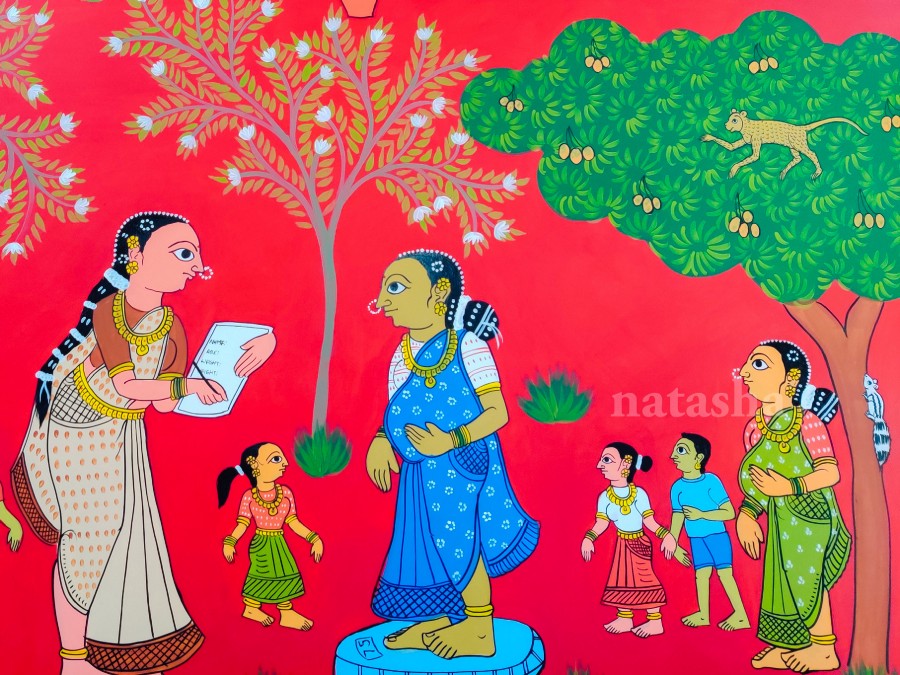

ASHA workers have a long list of duties to perform. They are constantly busy conducting awareness campaigns, monitoring expectant and new mothers, ensuring care to patients and dealing with emergencies.

Ensuring that residents receive COVID vaccination isn't one of them.

Yet, many of the ASHA workers have voluntarily taken on the burden of creating awareness, mobilizing people and taking them to PHCs to get them vaccinated.

They also end up tracking the second dose much more effectively than COWIN.

This is nothing new for them.

ASHA workers played a significant role in the success of the Polio Eradication campaign. 

People in rural areas trust ASHA workers. That can be leveraged to conduct community level vaccination drives to ensure optimal coverage.

Will it add to their existing burden? Not if the number of ASHA workers is increased. Right now, there is one ASHA worker for every 1,000 population (less if the habitations are small). That ratio can be improved by adding more ASHA workers. At this moment, there is more than enough work for all of them, and even after full vaccination, there will continue to be new things that come up to keep the additional ASHA workers engaged.

We do have a Superhero Army in Sarees. Why not use them?

Saturday, March 6, 2021

India's tryst with Vaccines

 We all now know about the Plague Epidemic that started in 1896, and spread from Bombay to other parts of the country. It was to deal with this that the Epidemic Act was enacted in 1896 (and which continues to this day). What is much less known is that in 1897, Dr. Haffkine developed the Plague Vaccine in his 2 room laboratory in Parel, Bombay. This was the first case of a vaccine developed in India being used across the world.

The cholera vaccine too has strong connections to India. Dr. Haffkine developed the vaccine in France, but it was in India that he conducted the clinical trials and proved the efficacy of the vaccine in preventing the disease.

By the first decade of the 20th century, India had the capacity to produce vaccines against four deadly diseases- smallpox, cholera, plague and typhoid. Over the next few decades,  both development and manufacturing facilities were set up across the country, and India was a favoured destination for conducting clinical trials.

By the time we gained Independence, India was already a major player in the vaccine space.

Post independence, a facility to manufacture the BCG vaccine was set up in Guindy, Madras in 1948, and after a pilot project, the BCG vaccinations was extended to schools across the country. The campaign to ensure that all children receive the BCG vaccine, however, took off only many decades later.

In 1952, Zydus Cadila was the first indigenous compnay to set up manufacturing facilities for drugs and vaccines, following which many others came up.

Serum Institute set up facilities for the development and manufacture of vaccines 1966.

Genome Valley was developed in the then Andhra Pradesh in the mid 1990s, and attracted many, including Bharat Biotech and Shantha Biotechnics. Shantha Biotechnics, developed a recombinant product which received WHO prequalification as a Hepatitis B vaccine,  which cost a fraction of what the original vaccine cost.

India has been largely ‘atmanirbhar’ when it comes to vaccines for close to a century.

Our biggest successes have, however been in the immunisation of our huge population.

Small pox was finally eradicated in India in 1975- despite our large population and the challenges of reaching far-flung areas, we managed this feat before most other countries.

India's success story with the Oral Polio Vaccine is something that is studies in all public health courses. 

If we want to take pride in anything, it is our many historical successes that is what we should be proud of. Not just in the fact that we are a part of the supply chain of a global corporate.


To end with a story of the first “celebrity endorsement” for a vaccine campaign. When the smallpox vaccine was first introduced in the country, the response of the public was not very encouraging. In a bid to boost public confidence, before her marriage to the Maharaja of Mysore, Devajammani, his second wife got herself vaccinated with “minimum loss of dignity” in 1805. A portrait of the queen by Thomas Hickey where she is pointing to the place where she took the vaccine inspired the public to come forward to avail of the vaccination. People sharing photographs of themselves being vaccinated, therefore has a historical precedent from two centuries back.


LinkWithin

Related Posts with Thumbnails